
Pharmacovigilance
Ensuring Drug Safety Through Continuous Monitoring
Safety & Pharmacovigilance
At the Clinical Trials Unit of Haripur International Hospital, patient safety is our utmost priority. Our comprehensive pharmacovigilance system ensures adherence to ICH-GCP, DRAP, and international regulatory standards, supported by a skilled and GCP-trained team.
Adverse Event (AE) & Serious Adverse Event (SAE) Management
Prompt identification, documentation, and reporting of AEs/SAEs in compliance with protocols and regulatory timelines.Causality & Severity Assessment
Expert medical evaluation by qualified investigators to ensure accurate and reliable safety reporting.Regulatory & Sponsor Reporting
Timely submission of safety updates to Sponsors, CROs, and relevant authorities in line with global requirements.Safety Data Integrity
Maintenance of complete, accurate, and confidential pharmacovigilance records.Training & Awareness
Regular training programs for investigators and study staff to strengthen safety practices.Patient Protection
Immediate risk mitigation, medical management, and follow-up to safeguard every participant.Collaboration with Sponsors & CROs
Active coordination with Sponsors, CROs, and industry partners to ensure transparent safety communication and regulatory compliance.
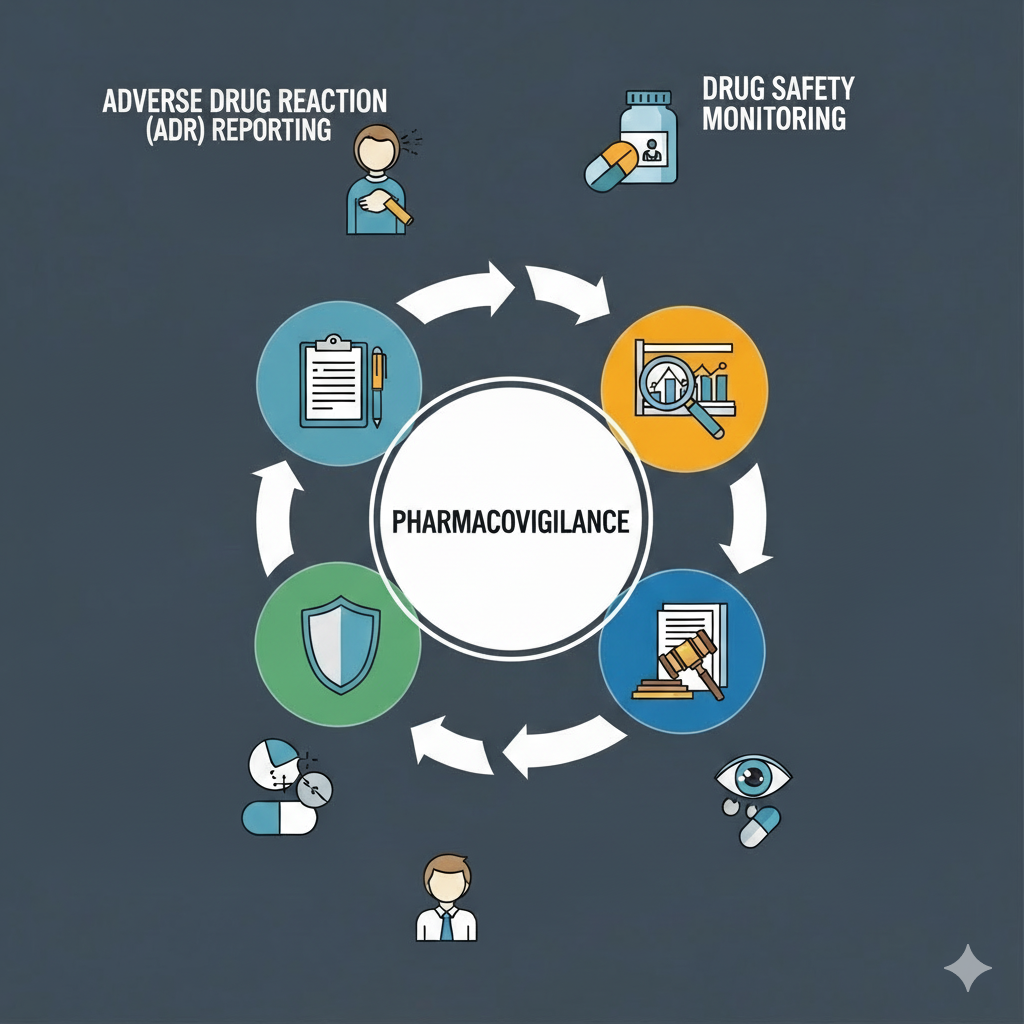
Pharmacovigilance in clinical trials refers
Pharmacovigilance in clinical trials is the science and practice of detecting, assessing, understanding, and preventing adverse effects or any other drug-related issues during the clinical development of a pharmaceutical product. It is essential for safeguarding patient safety and preserving the reliability of trial data.
Often referred to as PV in clinical trials, this function centers on monitoring investigational products, identifying potential risks at an early stage, and ensuring compliance with global regulatory requirements.
In line with the International Council for Harmonisation (ICH) E2A and E6 guidelines, sponsors must maintain robust systems for the collection, evaluation, and management of safety data throughout clinical studies. Regulatory authorities, including the U.S. Food and Drug Administration (FDA) and the European Medicines Agency (EMA), also require timely reporting of serious and unexpected adverse events to ensure the highest standards of patient protection.
Also known as PV clinical trial role, pharmacovigilance in this context focuses on monitoring investigational drugs to identify potential risks early and ensure compliance with regulatory requirements.
According to the International Council for Harmonisation (ICH) E2A and E6 guidelines, sponsors are required to have systems in place for monitoring and managing safety data during clinical trials. Regulatory agencies such as the U.S. Food and Drug Administration (FDA) and the European Medicines Agency (EMA) mandate timely reporting of serious and unexpected adverse events.
Pharmacovigilance in clinical trials extends across all phases of drug development:
Emphasizes detecting dose-limiting toxicities and establishing the preliminary safety profile.
Broadens safety surveillance to a wider patient population while simultaneously evaluating treatment efficacy.
Maintains comprehensive safety monitoring across diverse populations and extended treatment durations.
Although beyond the clinical trial phase, pharmacovigilance continues to track and evaluate long-term safety.
Roles and Responsibilities
Sponsor: Establishes a robust pharmacovigilance system and ensures timely and accurate safety reporting.
Investigator: Identifies and reports adverse events (AEs) to the sponsor and relevant ethics committees.
Clinical Research Organization (CRO): Supports or manages pharmacovigilance activities on behalf of the sponsor to ensure compliance.
Regulatory Authorities: Review submitted safety data, monitor compliance, and enforce regulatory standards.
Key Challenges in Pharmacovigilance During Clinical Trials
Under-reporting or delayed reporting of adverse events by investigators
Difficulty in accurately determining causality between treatment and adverse events
Integrating and standardizing safety data from multiple study sites and systems
Maintaining compliance with diverse and evolving global regulatory requirements
Why is Pharmacovigilance Important?
Pharmacovigilance is a cornerstone of clinical research, ensuring that reliable data is collected on the risks and benefits of investigational drugs. These insights help determine whether a treatment’s benefits outweigh its risks and guide sponsors in seeking regulatory approval for market authorization.
During Phase I–III clinical trials, safety profile evaluations provide critical evidence for ongoing research, regulatory submissions, and potential entry into new markets.
After regulatory approval, Phase IV (post-marketing) studies extend pharmacovigilance into real-world practice, monitoring long-term safety and effectiveness through post-marketing surveillance.
Why is Post-Marketing Surveillance Important?
Post-Marketing Surveillance (PMS) plays a vital role in safeguarding public health by monitoring the safety and effectiveness of drugs after regulatory approval and widespread use. It enables the detection of rare, unexpected, or long-term side effects, ensures consistent product quality, and supports timely regulatory actions when necessary to protect patients.
How Post-Marketing Surveillance Helps
Post-Marketing Surveillance (PMS) generates real-world evidence that may not surface during controlled clinical trials. It helps identify adverse drug reactions, monitor usage trends, and detect emerging safety concerns. This information enables healthcare professionals and regulators to make informed decisions and implement effective risk management strategies.
How HIH-CTU Can Support Your Post-Marketing Surveillance
The Clinical Trials Unit at Haripur International Hospital (HIH-CTU) provides end-to-end support for Post-Marketing Surveillance (PMS), including study design, data collection, analysis, and regulatory reporting. Our team of experts ensures full compliance with international standards while delivering accurate, actionable safety insights to support effective risk management and patient safety.
Partner with DRAP APPROVED SITE
A small river named Duden flows by their place and supplies it with the necessary regelialia.
It is a paradisematic country, in which